The Canadian insurance market feels busy right now. There is energy in the MGA space, new products coming through, technology reshaping underwriting, and regulators paying close attention. It is a healthy kind of pressure, but pressure nonetheless.
After more than 40 years in property and casualty, I have learned that markets rarely stand still for long. What stands out today is the pace of change. New entrants are launching quickly. Established players are acquiring and expanding. Systems are being upgraded. Wordings are evolving. Oversight is firmly under the spotlight.
A changing MGA landscape
Across Canada, we continue to see new standalone MGAs entering the market. Many are insurtech-led, built on digital underwriting platforms and data-driven models. At the same time, established firms are expanding through acquisition and broadening their product offerings.
Specialty lines remain a key area of growth, particularly cyber. Difficult and underserved risks are attracting capacity and entrepreneurial energy. In some commercial lines, we are also seeing signs of softening, with broader appetite and increased competition.
All of this creates opportunity. It also creates complexity. As businesses grow, introduce new wordings, or implement new systems, small gaps can appear. An audit brings those gaps into focus. It provides reassurance that underwriting, claims handling, and documentation are aligned with binding authority agreements and regulatory expectations.
The value of a structured audit approach
The Lloyd’s audit methodology gives us a clear framework, beginning with detailed pre-audit questionnaires and continuing through testing of controls and review of files. The final report is not just a summary of findings. It should provide practical recommendations that help strengthen processes and reduce risk.
Many audits now require a very tailored approach. A new product launch, a change in underwriting management systems, or performance concerns can all shape the scope. Pre-Coverholder reviews are equally important. They set the tone early and help ensure readiness before formal approval is granted.
In Canada, language adds another layer of responsibility. Conducting audits in both English and French is essential, particularly in Quebec. Clarity in communication and documentation supports both compliance and operational effectiveness.
Regulatory focus and documentation discipline
Bill 96 continues to influence Quebec-based operations. Binding Authority Agreements must accurately reflect language law requirements, and wording precision is critical. Even small inconsistencies can create unnecessary exposure.
Regulatory expectations across Canada remain firm. Documentation quality, governance frameworks, and oversight processes are all under scrutiny. Firms that keep their house in order are better placed to manage questions when they arise.
Emerging risks and technical sectors
Canada is also contributing to increasingly complex global risks. High-tech manufacturing and component supply linked to space exploration are good examples. These are high-value, technically demanding exposures. They require strong underwriting discipline and careful oversight.
Audits in these sectors need a practical understanding of how the business operates, not just what is written on paper. Controls must reflect the real-world risk being assumed.
Looking ahead
As we move toward the second half of 2026, I expect the Canadian MGA market to continue evolving at this more rapid pace. Technology will become more embedded in underwriting and claims. Specialty risks will expand. Regulatory attention will remain steady.
In that environment, audit work supports confidence. It reassures capacity providers, strengthens internal controls, and gives management a clearer view of how the business is performing.
Earlier in my career, I progressed to become a property facultative reinsurance underwriter at a time when very few women held those roles in Canada. Mentorship played a significant part in my journey, and I remain committed to supporting newer professionals entering the industry today. Strong standards and shared knowledge help the whole market move forward.
Canada has a resilient insurance sector with deep expertise. With careful governance and thoughtful oversight, 2026 can be a year of steady, sustainable growth.
If you would like to discuss your upcoming audit requirements, pre-Coverholder reviews, or specific regulatory considerations, please get in touch.

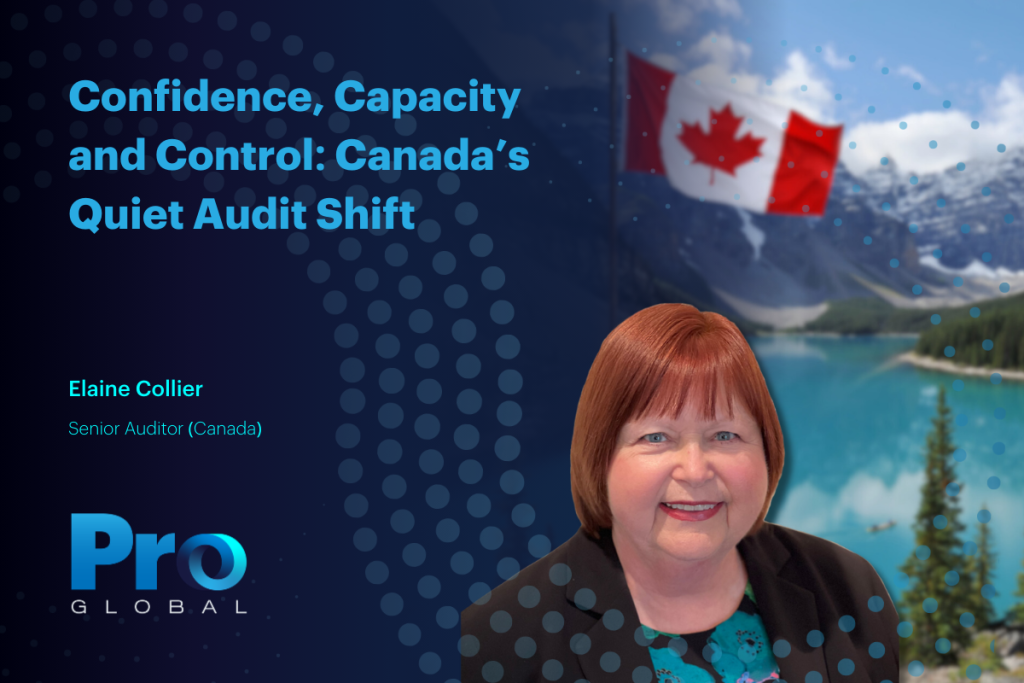
Meet our expert
Name: Elaine Collier
Job title: Senior Auditor (Canada)
Get in touch
To speak to the Pro Global team please feel free to reach out to us at:


Lysander PR
To contact our PR team directly please use the link below

 View Previous