November 2026 will mark ten years since Alan Metzger joined Pro Global; a milestone in a distinguished 40-year career in UK general insurance. As Technical Claims Manager (Sensitive Claims), Alan leads the Sensitive Claims Team, specialising in historical abuse and complex care claims – a role he has held since February 2023.
Alan first joined Pro Global in 2016 as Senior Claims Manager, later becoming Head of Strategy – Abuse and Care in 2021. His expertise spans from handling claims, at Supreme Court level, to shaping market policy through his work with the Employers’ Liability Tracing Office (ELTO) Advisory Board, the ABI’s Public Liability Claims Working Group, and the Insurance/Reinsurance Legacy Association (IRLA) LCC.
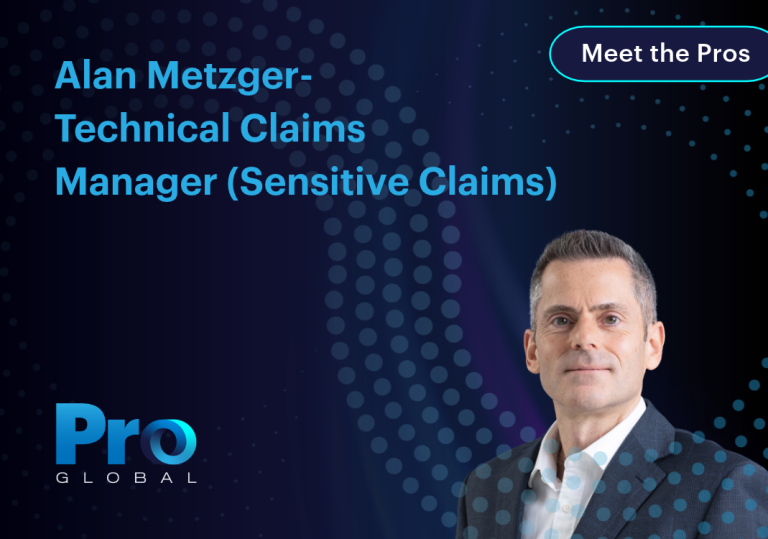
Before Pro Global, Alan spent three decades in senior claims roles with a major insurer. We spoke with him about the nuanced and often emotionally charged world of sensitive claims – an area where technical complexity meets deep human impact, and where every decision carries profound consequences.
- What fascinates you the most about sensitive claims? And what is the best thing about leading a team that deals with these claims?
What fascinates me about sensitive claims is the complex challenges they present across liability, causation and quantum, within a legal landscape that continues to evolve. These claims require not only strong technical expertise, but also careful judgement and an understanding of the human impact behind each case.
The Crime and Policing Act 2026 removed the three-year limitation period for child sexual abuse claims in England and Wales, with the change taking effect on 29 June 2026. It allows survivors to bring historic claims without a statutory limitation period, while changing the burden on defendants when challenging whether a fair hearing is possible.
Sensitive claims demand a balance between rigorous investigation, empathy and fairness. Getting that balance right is essential not only to achieving appropriate outcomes, but also to maintaining trust in the claims process. Alongside the legal considerations, these claims carry real reputational risk for insurers and policyholders alike, requiring thoughtful and flexible management.
For me, the most rewarding aspect of the role is being part of a highly skilled team committed to delivering great outcomes.
2. As records become more digitalised, what kind of information do you deal with in a sensitive claim and what guardrails are in place in the industry to protect such high-stakes data?
These kinds of claims involve very sensitive personal matters that claimants may have struggled with for years or never even disclosed to loved ones.
For example, the type of information we see can be detailed allegations, medical records or reports, Social Services records, police interviews, witness statements and the like. Also, whether it is by specific court order or otherwise, abuse survivors are entitled to anonymity, and they rightly expect us to safeguard such material.
Pro Global has robust information retention, access and sharing protocols in place to protect that data. We utilise modern systems capable of restricting access, exchange material by secure means and do not identify claimants by name in correspondence. The specialist panel lawyers we instruct are equally committed to data protection.
Ultimately, protecting sensitive information is about more than meeting regulatory obligations. It is fundamental to maintaining trust in the claims process. Insurers, claims handlers and legal advisers must all recognise that the information they hold represents deeply personal experiences, and their responsibility to protect it should remain central to claim handling.
3. While it’s important for the industry to empathise with victims, it also has to deal with some fraudulent sensitive claims – how can insurers ensure that they do not victimise legitimate claimants?
I would say that fraudulent claims are comparatively rare in abuse but fallible memories, retrospective attribution of issues, multifactorial causation and differing medical opinion can all lead to unrealistic views or expectations.
Prompt and thorough investigation is vital in assessing claim validity to deliver resolutions as quickly as possible, whether through payment of fair compensation or clearly reasoned defence.
Of course, it isn’t always possible to reach agreement, and some claims will proceed to court for judicial assessment. It is important to identify the correct cases to contest, consider any wider implications and carry stakeholders with you.
Fairness depends on making evidence-led decisions, explaining the rationale behind them and recognising the distinction between a claim that cannot be substantiated and one that is fraudulent. By taking this approach, insurers can protect policyholders’ interests without placing unnecessary barriers in the way of legitimate claimants.
4. What complex ethical issues do insurers face in responding to claims from vulnerable claimants?
Pursuing claims can be extremely difficult for abuse survivors and it is important we recognise that, whilst investigating thoroughly and responding appropriately on the merits. The challenge for insurers is to balance the need for robust claims assessment with an approach that recognises the individual circumstances and vulnerabilities of each claimant.
Repeated questioning on abuse history can be retraumatising for claimants so there is an ethical tension in assessing the need for additional medical or other expert evidence.
Pre-medical settlement offers may be appropriate where the facts are clear. In some cases, criminal prosecution of alleged abusers can be ongoing, and we must be careful not to prejudice that process through our civil claims handling.
We will always encourage unrepresented claimants to seek independent, expert legal advice and provide clear explanations for our approach. Open communication is particularly important in these circumstances, as claimants should understand why information is being requested, how decisions are reached and what the next steps are.
For the industry, the challenge is to ensure that sensitivity is embedded in claims handling rather than treated as an additional consideration. This means equipping claims professionals with the specialist knowledge, judgement and support they need to make difficult decisions appropriately.
In short, we aim to deal with all claims sensitively, quickly and fairly for both claimants and policyholders. These objectives should reinforce one another: a well-managed process can be both rigorous in its assessment and respectful of the people involved.
5. How has the industry modernised how it deals with sensitive claims, and what would you like to see change going forward?
Many older books of business have been transferred to specialist legacy carriers and handling agents such as Pro with experienced SME’s and systems geared towards effective claims handling. This specialisation has helped ensure that complex historic claims are managed by teams with the appropriate knowledge, experience and processes.
Agreed handling protocols, such as the Association of British Insurers (ABI) Code of Practice helps to drive consistent good practice across the industry, whilst for the legacy market Insurance Reinsurance Legacy Association (IRLA) facilitates discussions between insurers and encourages best practice.
However, modernising sensitive claims handling is not simply about transferring portfolios or introducing better systems. It is also about ensuring the industry has the specialist expertise, consistent processes and capacity to respond appropriately as legal requirements and expectations evolve.
The recent change to limitation law in England and Wales represents a significant development for child abuse claims going forward. It is important the industry works together to understand the implications for claims handling and outcomes.
Looking ahead, I would like to see continued collaboration across the industry to share expertise, promote consistency and ensure that good practice evolves alongside the law. Investment in specialist training, effective information management and proportionate, claimant-sensitive processes will be essential.
Ultimately, the industry must look beyond meeting its immediate legal obligations. The priority should be to build a consistent, sustainable approach to sensitive claims that delivers fair outcomes for claimants and policyholders alike, while giving insurers confidence that complex historic claims are being managed appropriately.
Get in touch
To speak to the Pro Global team please feel free to reach out to us at:


Lysander PR
To contact our PR team directly please use the link below

 View Previous